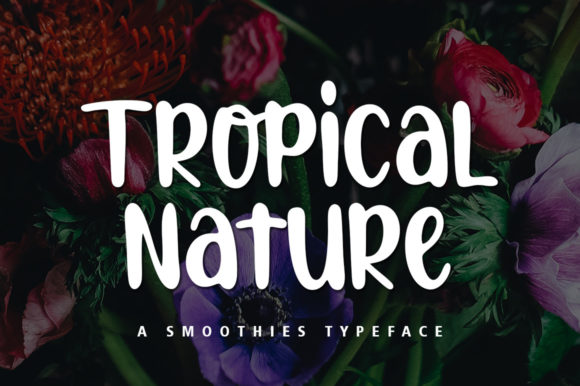
Tropical Nature: Infusing Your Designs with Organic Elegance
When we talk about modern typography, there is often a tension between structure and fluidity. We see plenty of sharp, geometric sans serif fonts that look incredibly professional, and we see rigid serif fonts that feel authoritative. However, the current design landscape is craving something more human, more tactile, and more connected to the natural world. This is where Tropical Nature enters the conversation. It is not just another display font; it is a carefully crafted typeface designed to bridge the gap between the wild beauty of nature and the refined needs of commercial design.
Understanding the Visual Personality
At its core, Tropical Nature is a smooth and cursive display font. But what does that mean for your specific project? It means the letterforms are designed with a flowing, connected baseline that mimics the rhythm of handwriting but with the legibility of a professional typeface. Unlike a chaotic handwritten font that can be difficult to read in long sentences, this font offers a structured flow. The curves are soft and organic, avoiding sharp corners to create a welcoming and gentle aesthetic.
The visual personality of this typeface leans heavily into the "boho" and farmhouse aesthetic. If you are working on a project that needs to evoke feelings of warmth, relaxation, and earthiness, Tropical Nature is an excellent candidate. It carries a certain weight of authenticity. It feels like it was written by a skilled calligrapher rather than generated by a machine. This distinction is vital for brands trying to establish a connection with their audience. In a world of digital noise, a font that feels handmade can instantly lower the barrier between a brand and a consumer.
Strategic Applications for Brand Identity
Choosing the right typeface is a cornerstone of building a strong brand identity. While a sans serif font might handle your body copy and technical details, a font like Tropical Nature is the voice of your brand’s personality. It is best utilized where emotional impact is required. Think about logo design. A logo needs to be memorable, and using a distinctive script or cursive style can help a brand stand out against competitors who rely on standard block letters.
However, context is everything. This font shines brightest in specific sectors. For entrepreneurs in the wellness, beauty, travel, or sustainable goods industries, this typeface feels like a natural fit. It works beautifully for:
- Packaging Design: Imagine this font on a label for artisanal coffee, organic skincare, or handmade candles. It immediately signals quality and a personal touch.
- Social Media Graphics: On platforms like Instagram or Pinterest, visual hierarchy is key. Using Tropical Nature for headlines or quotes grabs attention without feeling aggressive. It invites the user to stop scrolling and engage.
- Editorial Design: In magazines or blogs focusing on lifestyle or travel, this font can be used for pull quotes or section headers to break up the monotony of standard text.
- Web Design: Used sparingly, it adds a splash of personality to a website’s hero section or call-to-action buttons.
Mastering Font Pairing and Hierarchy
No font is an island. Even the most beautiful premium font needs friends. One of the most practical aspects of using a display font like Tropical Nature is understanding how to pair it. Because it is a "loud" and expressive font, it can be overwhelming if overused. It is not designed for body text. If you try to write a paragraph with it, readability will plummet.
The secret to success lies in contrast. To create a balanced visual hierarchy, you should pair Tropical Nature with a neutral companion. A clean sans serif font is usually the best partner. The geometric simplicity of the sans serif grounds the organic complexity of the script. Alternatively, a classic serif font can also work if you are aiming for a vintage or high-end editorial look, but be careful not to let the two styles clash.
Consider the scale as well. This typeface commands attention at larger sizes. Use it for your H1 headers, your main slogans, or your hero text. Then, switch to your secondary font for the supporting information. This contrast ensures that your design has a clear focal point. The eye is drawn to the cursive style first, then travels to the supporting text for the details. This is a fundamental principle of modern typography that drives user engagement.
Practical Evaluation and Licensing
Before committing to any design asset, it is crucial to do your due diligence. When evaluating Tropical Nature for a client project or your own business, start by testing the character set. Does it support the specific language you need? Does it have the punctuation marks required for your specific layout? High-quality fonts often include ligatures—special character combinations that improve the flow between letters. Check if the font includes these, as they can significantly enhance the realism of the text.
Furthermore, you must consider the commercial licensing. Typography licensing can be tricky. There is a vast difference between a font used for a personal hobby project and one used in a commercial enterprise. If you are a small business owner or a designer creating assets for a client, ensure you have the correct license that permits commercial use. This protects you legally and supports the font designers who create these tools.
Finally, test the readability in the medium where it will live. A font might look stunning on a high-resolution screen but lose its charm on a textured paper stock, or vice versa. Print out samples. View them on mobile devices. Ensure that the "smooth and cursive" nature of Tropical Nature remains legible at the sizes you intend to use. By taking the time to test and evaluate, you ensure that this typeface becomes a valuable asset in your creative toolkit, helping your designs come alive with a distinct, organic flair.