Amber: A Creative Font with Cookie Charm and a Bit of Bite
Understanding Amber's Unique Personality
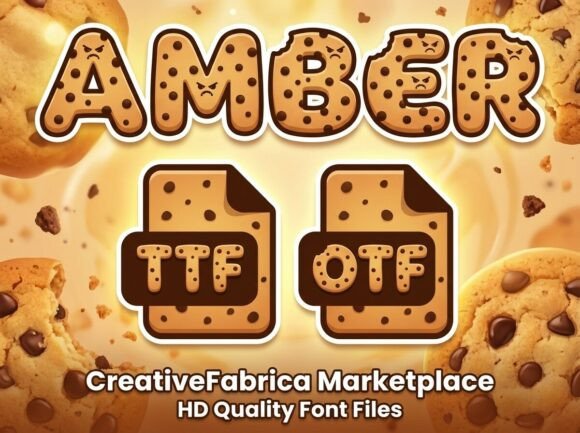
When you first encounter the Amber font, you'll notice it doesn't play by the usual typographic rules. This is a display font that takes its visual inspiration from a universally loved treat: the chocolate chip cookie. The characters are chunky and rounded, mimicking the soft, irregular shape of a freshly baked good. However, the designers added a layer of narrative to the typeface. You'll find subtle "bite" marks taken out of certain letterforms, and scattered throughout the text are small, grumpy-faced chocolate chips. It's this combination of edible sweetness and a slightly defiant attitude that gives Amber its distinct voice.
This typeface isn't trying to be elegant or minimalist. Its strength lies in its ability to convey a very specific mood—one that balances "cute" with "attitude." The rounded terminals and thick strokes give it a friendly, approachable base, while the grumpy details inject a dose of personality and humor. For a designer or brand strategist, Amber is a tool for projects that need to stand out through character rather than sophistication. It's a premium font that serves a niche purpose exceptionally well, making it a valuable design asset for the right creative toolkit.
Where Amber Truly Shines: Practical Applications
Choosing a font is about matching its personality to your project's goals. Amber isn't a workhorse for body copy; it's a specialist for headlines, logos, and focal points. Its visual weight and decorative nature make it a natural fit for packaging design, particularly for artisanal bakeries, gourmet snack brands, or children's treats. Imagine this typeface on a bag of craft cookies or a box of fun-flavored popcorn. It immediately communicates a product that is homemade, playful, and not taking itself too seriously.
Beyond packaging, Amber excels in social media graphics and digital marketing where grabbing attention is paramount. A bold headline set in Amber can stop a scroll. It's perfect for promoting a bakery sale, announcing a new product, or adding personality to a food blog's title card. For entrepreneurs and small business owners in the food or lifestyle space, using Amber in your logo design or primary branding elements can create instant recognition and a memorable brand identity. It tells customers exactly what to expect: something fun, a little cheeky, and delicious.
Event planners and crafters will also find a friend in Amber. It's an excellent choice for kids' birthday party invitations, thank-you cards, or thematic decorations. The font's playful vibe resonates well with younger audiences while the grumpy chip detail adds a wink for the adults. In editorial design, it could be used sparingly for pull quotes or section headers in a food magazine to break up the visual rhythm and inject a moment of whimsy.
Pairing and Professional Use: Making Amber Work
Using a highly stylized display font like Amber requires thoughtful pairing to maintain visual hierarchy and readability. The golden rule is contrast. Since Amber is bold, rounded, and decorative, it needs a partner that is clean and neutral. A simple, geometric sans serif font for body text is often the perfect companion. Think of fonts like Open Sans, Lato, or Montserrat. These provide a clear, legible counterpoint that doesn't compete for attention, allowing Amber's headlines to pop without overwhelming the reader.
For a more classic or editorial feel, you could pair it with a clean serif font like Georgia or a modern serif like Playfair Display for subheadings. The key is to ensure the body text remains highly legible across all formats, from a mobile screen to a printed flyer. Avoid pairing Amber with other expressive script fonts or handwritten fonts, as this will create visual chaos and undermine professionalism.
Before committing to Amber for a commercial project, a few practical checks are essential. Always test the font in context. View it at the size you intend to use it. Does the character detail hold up? At very small sizes, the grumpy faces and bite marks might become muddy, so it's best reserved for larger applications. Review the font's character map thoroughly. A quality premium font often includes multiple stylistic sets, alternates, or ligatures. You might find different versions of the grumpy chip or alternative letterforms that better suit your layout.
Finally, respect the licensing. If you're using Amber for a client's logo design, product packaging design, or any commercial venture, ensure you have the appropriate commercial license. This protects both you and the font creator. Used strategically, Amber is more than just a novelty. It's a powerful tool for injecting personality, creating emotional connection, and building a brand identity that feels genuine and engaging. It proves that sometimes, the most effective modern typography doesn't have to be serious—it just has to be right.