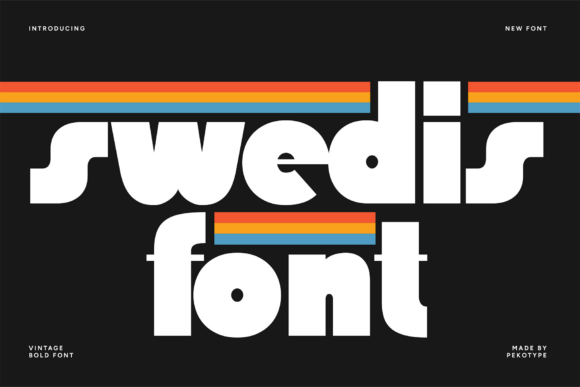
Reviving Retro Cool: The SWEDIS Display Typeface
Finding a typeface that captures the energy of a bygone era without feeling dated is a common challenge in modern design. Many retro-inspired fonts lean too heavily into parody or lack the technical refinement needed for today’s high-resolution screens and print standards. SWEDIS bridges that gap effectively. It is a premium font that channels the bold, unapologetic aesthetic of the 1980s—think movie titles, neon signage, and arcade logos—but strips away the grit to present a clean, vector-ready design suitable for professional applications. If you are working on a project that needs to shout without screaming, this typeface offers a compelling solution.
Visual Anatomy and Personality
At its core, SWEDIS is a display font defined by its "super bold, fat, and blocky" geometry. The letterforms are constructed with heavy strokes and minimal contrast, giving the typeface a substantial visual weight that anchors a layout instantly. Unlike many script fonts or handwritten fonts that rely on fluidity, SWEDIS relies on stability. The terminals are sharp, and the spacing is tight, creating a cohesive, monolithic look when used in headlines.
The personality of SWEDIS is confident and nostalgic. It evokes the "Miami Vice" era—a time of high contrast and synthetic optimism—but adapts these traits for a contemporary audience. It avoids the excessive stylization that can make some vintage fonts illegible. Instead, it balances that "retro" vibe with the clarity required for modern web design and logo design. It is a typeface that understands its role: to be seen and to set a mood immediately.
Strategic Applications in Modern Design
Understanding where a font excels is just as important as how it looks. SWEDIS is not designed for long-form body text; it is a specialized tool for high-impact moments. Here is how it fits into various creative workflows:
- Branding and Logo Design: For brands targeting a niche market—such as vintage clothing lines, craft breweries, or synth-wave musicians—SWEDIS provides an instant identity. Its distinct silhouette ensures high brand recognition. When used in a logo, it communicates strength and style without needing complex graphics to support it.
- Editorial and Packaging Design: In editorial design, a striking headline is half the battle. SWEDIS can turn a magazine cover or a book title into a visual event. Similarly, in packaging design, where shelf appeal is paramount, the bold weight of the font helps products stand out against competitors, particularly for limited edition runs or special releases.
- Digital and Social Media: The digital landscape is noisy. For social media graphics, thumbnails, or hero sections on a website, SWEDIS cuts through the clutter. Its high contrast ensures legibility even at smaller sizes or when overlaid on busy photographic backgrounds, provided the color contrast is sufficient.
- Events and Merchandise: Whether designing for a music festival, a conference, or merchandise like t-shirts and posters, the vintage display quality of SWEDIS resonates with audiences looking for authenticity and cool factor.
Technical Considerations: Readability and Hierarchy
A common mistake in using display fonts is prioritizing style over function. While SWEDIS is undeniably stylish, its practical application relies on understanding visual hierarchy. Because of its heavy weight, it commands the most attention. It should be used for primary headlines (H1, H2) or short call-to-action phrases. Trying to use it for subheadings or body copy will result in a wall of text that is difficult to scan.
When implementing SWEDIS, consider the surrounding typography. A sans serif font with a neutral or geometric structure often pairs well, offering a clean counterpoint to SWEDIS's boldness. Alternatively, a classic serif font can create an interesting tension between old-world elegance and 80s pop culture. The goal is to maintain professionalism by ensuring the hierarchy is clear: SWEDIS leads, and the supporting type informs.
Practical Integration and Licensing
Before integrating SWEDIS into a commercial project, a few practical checks are necessary. First, review the character set. A quality premium font usually includes alternates, ligatures, and extended language support. Check if the font includes stylistic sets that allow you to tweak the letterforms for specific words, adding a custom touch to your brand identity.
Second, evaluate the licensing. If you are a small business owner or a freelancer, you need to ensure the license covers your specific use case—whether it is for a client’s website, a printed run of posters, or digital assets. Most foundries offer different tiers for desktop, web, and app usage.
Finally, test the font in context. Mock up your design in the environment where it will live. Does the SWEDIS typeface hold up on a mobile screen? Does it print clearly on textured paper? By treating SWEDIS as a strategic design asset