Rocket Doodle: The Handmade Font with Serious Character
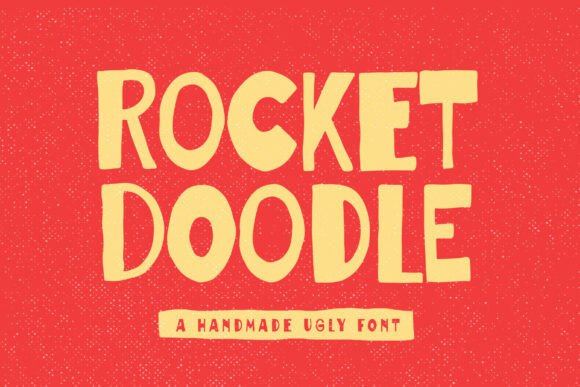
In a digital landscape saturated with sleek, predictable typefaces, finding a font that feels genuinely human can be a challenge. Rocket Doodle isn't trying to be perfect, and that's precisely its strength. This premium font is a bold, handmade display typeface built on a foundation of intentional imperfection. Its chunky strokes, uneven baselines, and quirky, hand-drawn aesthetic capture the spontaneous energy of a felt-tip marker or a carefully cut piece of paper. It’s the visual equivalent of a confident, slightly messy signature—full of personality and unapologetic charm.
Understanding the 'Ugly-Cute' Appeal
Rocket Doodle leans into what designers sometimes call "ugly-cute." It’s not a refined script font or a clean sans serif font. Instead, it embraces the wobble, the thick-and-thin pressure variations, and the organic irregularity that comes from actual handwork. This gives it an authentic, approachable vibe that polished digital fonts often lack. The overall effect is playful, energetic, and surprisingly versatile for the right project. It’s a creative font that doesn’t whisper; it speaks with a distinctive, friendly voice.
Where Rocket Doodle Truly Shines
Think of Rocket Doodle as your go-to tool for projects that need a burst of personality and warmth. Its strengths are most pronounced in contexts where you want to grab attention and feel human-made.
- Kids' & Family Brands: From toy packaging to educational apps, this typeface radiates fun and approachability. It’s perfect for logos, book titles, and merchandise where a sense of play is essential.
- Posters & Event Graphics: Need to announce a workshop, a local fair, or a creative sale? Rocket Doodle delivers impact. Its bold presence works well at larger scales for posters, banners, and signage.
- Branding with Personality: For small businesses, cafes, craft breweries, or indie makers, this font can be a cornerstone of a memorable brand identity. It suggests craftsmanship, individuality, and a hands-on ethos. Pair it with a clean sans serif for body text to maintain professionalism while letting the display font do the talking.
- Illustrations & Editorial Design: Use it for chapter titles in a fun cookbook, headers in a creative blog, or integrated into digital illustrations and zines. It adds a layer of tactile, handcrafted detail.
- Social Media & Digital Content: In a feed of templated graphics, Rocket Doodle helps your posts stand out. It’s excellent for Instagram stories, YouTube thumbnails, and Pinterest pins where stopping the scroll is the goal.
Making It Work: Practical Application Tips
Using a display font like Rocket Doodle effectively is about balance and context. Here’s how to get the most out of it.
Evaluating the Fit for Your Project
Before committing, ask yourself: Does this project benefit from a strong, handcrafted voice? Rocket Doodle is fantastic for headlines, logos, and callouts, but it’s generally not suitable for long paragraphs of body text. Its charm lies in its role as a focal point. If your project requires utmost formality or serious corporate tone, a traditional serif font or a neutral sans serif might be more appropriate. But for anything needing energy, creativity, or a personal touch, it’s a powerful asset.
Testing Font Pairings for Harmony
The key to using a bold display typeface is pairing it with a more neutral companion. A simple, geometric sans serif font (like Montserrat, Lato, or Open Sans) creates a beautiful contrast that keeps designs clean and readable. For a more eclectic, layered look, you could pair it with a straightforward serif font. The goal is to let Rocket Doodle command the hierarchy for headlines and key phrases while your supporting font handles the details clearly.
Considering Readability and Hierarchy
While Rocket Doodle has excellent legibility at display sizes, always test it in your specific context. Ensure sufficient contrast with the background color and adequate spacing (tracking and leading). Its uneven baseline means kerning (the space between specific letter pairs) might need manual adjustment in professional design software for perfect harmony in a logo lockup. Use it to create clear visual hierarchy—make your main message impossible to miss, then guide the reader’s eye to supporting information set in a calmer typeface.
Checking the Toolkit and Licensing
A quality premium font like Rocket Doodle often comes with more than just the basic letters. Look for included styles—it might offer alternates, ligatures, or stylistic sets that give you even more creative control over the final look. Always review the commercial license to ensure it covers your intended use, whether for a client project, merchandise, or a commercial website. Respecting licensing is part of professional practice.
Beyond the Basics: Strategic Font Selection
Choosing a typeface is a strategic decision that influences perception. Rocket Doodle doesn’t just display words; it communicates values like creativity, approachability, and authenticity. In packaging design, it can make a product feel handmade and special. In web design, it can inject personality into a otherwise minimalist layout. For a content creator or blogger, it can become a recognizable part of your visual language across platforms.
The best way to know if Rocket Doodle is the right fit is to see it in action. Mock up your logo, lay out a sample social media post, or place it on a product package. Does it elevate the message? Does it resonate with the audience you want to attract? If your brand or project is about being bold, friendly, and a little bit different, then this quirky, expressive typeface might just be the perfect design asset to make your work stand out with real, human character.